writing is medicine.
And there’s 40 Years of Science to prove it.
You don't need to be a writer to use writing to process trauma, pain, or unresolved grief. You need a pen and a hard thing that costs too much to keep carrying.
When something painful happens to us, the story we tell ourselves about it gets encoded in our brain and body and starts playing on repeat. A good story settles, and we carry it lightly. A painful one, left unresolved, is heavy and eventually, it will surface physically: disrupting your sleep, sapping your energy and vitality, and weakening your mental and overall biological health.
Hi, I'm Dr. Sarah Long, and I teach Radical Revision, an evidence-based method for
re-authoring the stories that keep us stuck into stories we can stand to live inside.
This method draws on what neuroscience now understands about how painful experiences get wired into the brain and how writing can rewire it, so our nervous systems can stand down, our stories can stop hurting us, and our bodies can feel better.
Live from the TED stage:
What if the words we write could help us heal the parts of ourselves that no one else can see? In this deeply personal TEDx talk, a life-altering discovery leads to a powerful exploration of grief, trauma, and the surprising connection between storytelling and healing. Blending personal experience with scientific research, this talk reveals how putting our experiences into words can help us make sense of what we’ve endured, reconnect with ourselves, and find meaning in even the most difficult moments.
Here, you'll find the clinically-proven tools and expert guidance to stop managing what’s happened to you and start metabolizing it.

Start with a Course
Private, self-paced, forever access.
Some stories stay with us longer than we’d like. These self-paced courses guide you through research-backed writing exercises that are shown to help people process difficult experiences, reduce stress, improve key health markers like immune function and sleep, and make sense of life's hardest moments.
Whether you're navigating grief, burnout, heartbreak, transition, death, or a story you can't seem to stop revisiting, you'll learn a proven writing practice you can use whenever you need it most.
Try it for Free
Try the first step of the Radical Revision Method free.
You don't have to buy anything, or even think of yourself as a writer, to benefit from this method. To dip your toe in, I’m offering a free four-day protocol called Writing Toward the Reckoning. It's the first of the five steps in The Radical Revision (TM) method: the step called Reveal, where you get a painful story out of your body and onto the page. It draws on forty years of research linking this kind of structured writing to real, physical change, from fewer doctor visits to better sleep, and all it asks of you is twenty minutes a night, four nights, with no one reading over your shoulder and nothing to perform — just let the ugly out. You do it at your own pace, and it's yours to keep: a way to park one of the hard parts of being human somewhere other than inside your head.


work With Me
For individuals who want to go deep quickly, and human-centered organizations looking for science-backed methods to support their best people.
A limited number of private consulting spots for people ready to swim into the deep end of your inner pool. We use your own writing to find the patterns you can’t see from inside them, and I bring computational linguistic analysis to show you, in your own words, what’s already shifting in your body and your thinking. This is the most personal work I offer, and I keep it highly limited to just a few clients at a time on purpose so you get my full, undivided attention.
This same evidence-based approach works for healthcare organizations, nonprofits, and human-centered businesses seeking practical tools to support resilience, reduce burnout, and help their people move through change.

buy the book
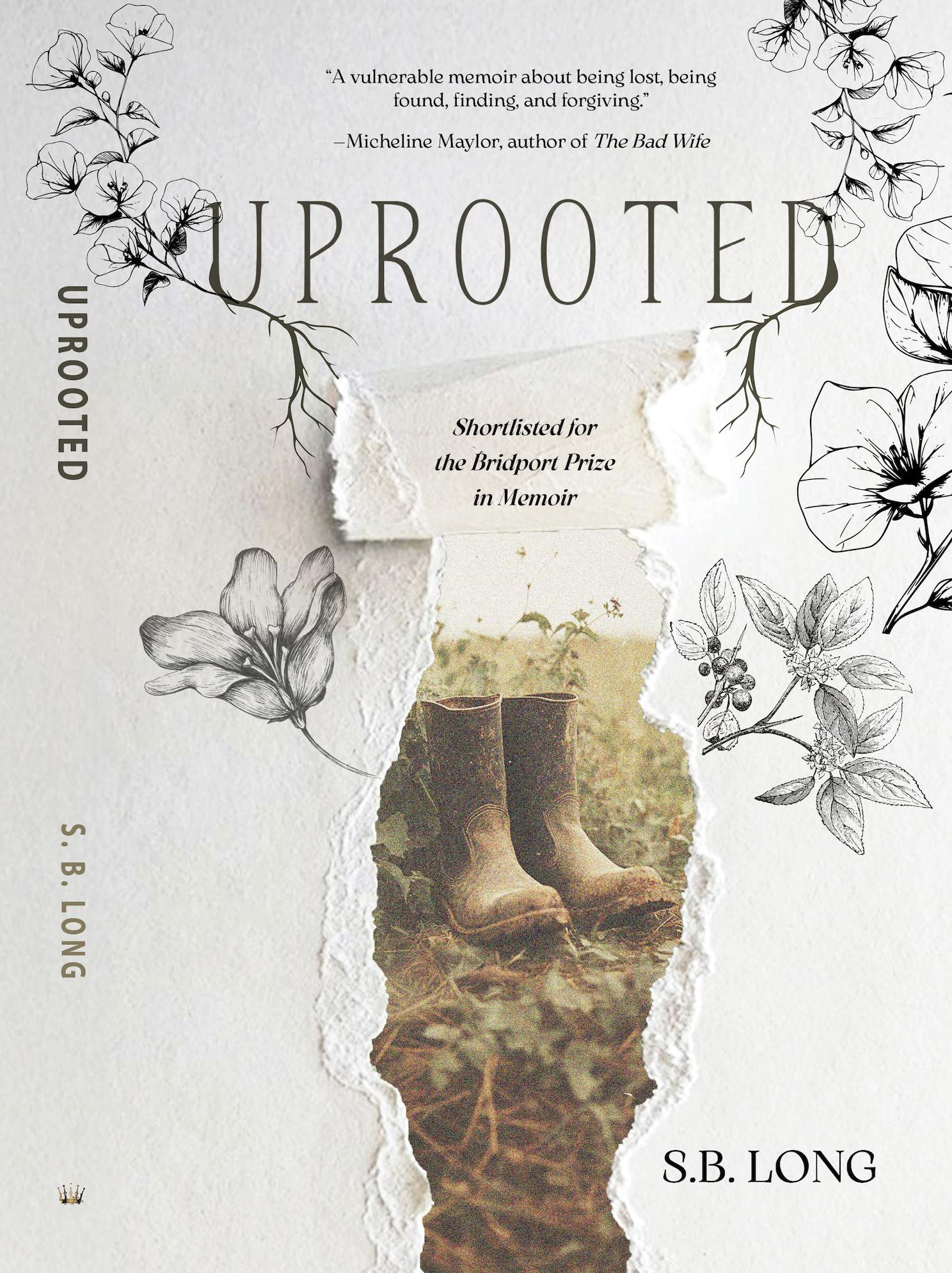
Uprooted: A Memoir of Belonging and Becoming is the story of what I found when I went looking for where I came from. Adopted at birth, I traced a thread back to a birth family in the hills of rural Tennessee, and into the grief, mental illness, and intergenerational trauma that came with them. Set against the backdrop of a regenerative farm in the Appalachian Mountains, it's an unflinching, mythic account of loss, reckoning, and the slow work of growing something new from broken ground.
A Newsletter for Navigating the Hard Parts of Being Human
Stories, science, and writing practices for making sense of what happens to us. Here, I explore grief, belonging, identity, meaning-making, and the neuroscience behind the stories we carry. You'll find essays, the latest research findings, questions to spur authentic conversation, and occasional field notes from life on an Appalachian homestead. If you've ever wanted a community of seekers to help you think about and process the hard parts of being human, then this Sub is for you. And it’s totally free.
Frequently Asked Questions
-
No. In fact, it’s probably better if you don’t even like writing. This isn't a craft class, and I'm not grading you. Spelling, grammar, and eloquence are irrelevant here. The protocol literally instructs you to ignore them and just keep your hand moving. The benefits show up in clinical and non-clinical populations regardless of writing ability, and the research has found them at comparable rates whether the writer holds an advanced degree or a sixth-grade education. You're not making art. You're metabolizing experience.
While there are courses designed specifically for writers, those courses are clearly marked on the course page and most individuals not interested in learning craft take the basic Radical Revision course.Pennebaker & Chung, "Expressive Writing: Connections to Physical and Mental Health"
-
Open-ended journaling can keep you circling the same pain for years without ever setting it down, feeding rumination and avoiding resolution. Directed disclosure writing is structured on purpose: short, time-limited sessions across consecutive days, focused on one difficult experience and your deepest thoughts and feelings about it with an aim at building a story arc and narrative coherence. The structure is the medicine. You're not venting into a void like when you’re journaling. You're moving an experience toward a shape that will finally hold so your nervous system can stand down.
Reinhold et al., Frontiers in Psychology, 2023 -
No, and this is not therapy but it is trauma-informed therapeutic writing. This is reflective, evidence-based writing work, not psychotherapy, not a diagnosis, and not crisis care. Think of it as complementary: it's built to work alongside the therapy, medication, or medical care you may already have, deepening that work rather than competing with it.
It can also reach people who've found that talk therapy or the faster fixes didn't fully resolve what they were carrying. Some things are easier to put on a page than to say out loud.If you're in acute distress, your first call should be a licensed provider or a crisis line. When you're steady enough for reflective work, this is here for you.
-
If we work one on one, and after you complete the Radical Revision course, I can analyze your writing using a research-based tool called LIWC (Linguistic Inquiry and Word Count), developed by psychologists to study the relationship between language, emotion, and health.
The software looks for patterns in how you use words over time and I interpret those patterns.
Research shows that changes in language—particularly increases in insight and causal language and narrative coherence—are often associated with improved emotional and physical well-being.The analysis doesn't judge your writing. It helps us better understand what your words may be revealing about your process so we can fine-tune the prescription.
-
Yes, there’s research behind it. Four decades worth, actually. In the foundational studies, people who wrote about a difficult experience for a few short sessions made fewer doctor visits in the months that followed and showed better physical health than those who wrote about neutral topics (Pennebaker & Beall, 1986).
Another striking 1999 randomized trial published in JAMA showed that patients with asthma or rheumatoid arthritis who used a similiar writing protocol showed clinically meaningful improvements — better lung function for the asthma patients, reduced joint disease activity for the arthritis patients — four months later.Across the wider literature, reported physical benefits have included lower blood pressure, stronger immune response, better sleep, and reduced physical and emotional pain.
This scientific lineage now reaches into formal clinical care with a clinician-delivered descendant, Written Exposure Therapy, was found non-inferior to Prolonged Exposure, a gold-standard PTSD treatment, in a 2023 JAMA Psychiatry trial, and is now included in the VA/DoD clinical guidelines for PTSD.
Smyth et al., JAMA, 1999 · Sloan et al., JAMA Psychiatry, 2023 · National Center for PTSD -
The body, measurably. In the foundational studies, people who wrote about a difficult experience for a few short sessions made fewer doctor visits in the months that followed and showed better physical health than those who wrote about neutral topics (Pennebaker & Beall, 1986). The most striking proof came in a 1999 randomized trial in JAMA: patients with asthma or rheumatoid arthritis who used this writing protocol showed clinically meaningful improvements — better lung function for the asthma patients, reduced joint disease activity for the arthritis patients — four months later. Across the wider literature, reported physical benefits include lower blood pressure, stronger immune response, better sleep, and reduced pain. This is the same self-directed paradigm you'll practice here — and the lineage now reaches into formal clinical care: a clinician-delivered descendant, Written Exposure Therapy, was found noninferior to Prolonged Exposure, a gold-standard PTSD treatment in a 2023 JAMA Psychiatry trial, and is now included in the VA/DoD clinical guidelines for PTSD. Smyth et al., JAMA, 1999 · Sloan et al., JAMA Psychiatry, 2023 · National Center for PTSD
-
Sometimes, briefly. And that's normal. Many people feel some distress right after a session but it typically passes within hours, while the benefits build over the following weeks and months. A little tenderness afterward is a sign the medicine is working, not a sign something's wrong. The one caution worth repeating: this is reflective work, not emergency care. If an experience feels genuinely unbearable to approach, that's a conversation for a licensed clinician first, and then, when you're ready, we can do this work together.
-
The name is a nod to Freud's famous phrase the talking cure, the idea that putting difficult experiences into words can help relieve suffering. The Writing Cure extends that idea from speaking to writing.
That said, I don't believe writing "cures" grief, trauma, heartbreak, or loss. There is no cure for the hard parts of being human but there are tools to help you manage the pain.
What decades of expressive writing research suggest is that writing can help us make sense of difficult experiences, quiet an overactive mind, and reduce symptoms of depression and anxiety. For many people, this process is also accompanied by improvements in stress, sleep, mood, and overall well-being.

Writing saves lives.
I know, because it saved mine.
I'm Dr. Sarah Long, author, TEDx speaker, and professor. I came to this work the hard way, and writing is what saved me. Now, my passion and purpose are to help guide and teach others how to use directed writing and the latest neuroscience to metabolize rather than just manage the harder parts of being human. My evidence-based practice includes
self-paced, online, asynchronous courses, individual coaching, and custom curriculum development for human-centered businesses, healthcare systems, and non-profit organizations who want to help their people become more resilient.
Let’s Talk.
Not sure where to start? You don't have to know yet.
Tell me a little about the story you're carrying, and together we'll find the right way in, whether through a course, workshop, writing group, or one-on-one consultation.
In addition to individual offerings, I speak with universities, healthcare organizations, nonprofits, businesses, book clubs, podcasts, and community groups about writing as medicine, narrative health, grief, meaning-making, and the stories that shape our lives.
Reach out with any questions or schedule a free consultation when you're ready.